
Practical questions
Loss-of-Control Eating Needs Support, Not a Stricter Challenge
If episodes of eating feel out of your control, it can be tempting to respond with a more rigid plan the next morning. That may leave the pattern itself unspoken. You can ask for help with loss of control, secrecy or distress without first proving a diagnosis or reaching a particular weight.
General information for adults. Not a substitute for medical assessment.
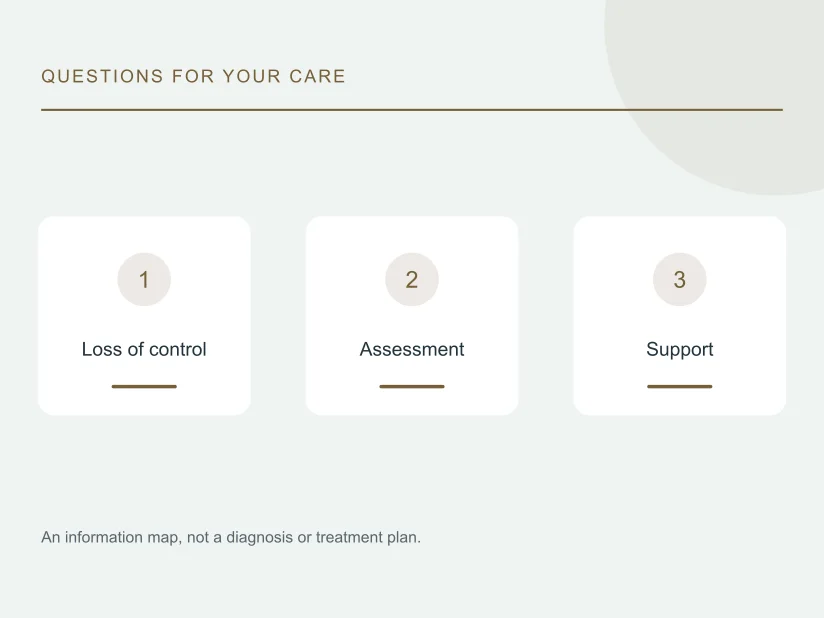
Describe the experience without judging yourself
The NHS describes binge eating disorder as a serious mental-health condition involving recurrent eating with a sense of not being in control. An occasional large meal is not enough for an online diagnosis. Explain the pattern, distress, secrecy and effect on daily life in your own words. You do not need to bring a perfect food diary or apologise for seeking care.
Source: NHS: Binge eating disorder
Do not make a restrictive plan the default answer
Ask whether a weight-loss programme is appropriate at this point and how any eating-disorder treatment will be coordinated. NHS guidance warns against dieting during treatment for binge eating because it can make stopping the pattern harder. That is not a personalised meal prescription from this article. The clinical team should agree the right approach with you rather than adding another unsupervised restriction or compensatory exercise rule.
Ask what support and follow-up are available
A supportive assessment can explore physical health and psychological needs together. Ask who has the relevant expertise, how referrals work and who to contact if the situation worsens. Mention any fasting, vomiting, laxative misuse or other compensation honestly, because those details affect safety. An online group can help you feel less alone, but its members cannot diagnose you or set your treatment.
Common questions
Must I be at a certain weight to ask for help?
No. Loss of control and distress are valid concerns regardless of a single scale reading.
Does one large meal mean a disorder?
No. Diagnosis requires assessment of the pattern and wider circumstances.
Should I hide compensatory behaviours?
No. Honest information helps the clinician assess safety and arrange appropriate support.
Sources and information limits
Sources support general medical principles, not the UAE booking policies or service availability. Confirm instructions and local arrangements with the care provider. The update date does not claim clinician review.
Content policy and review statusQuestions before arranging an appointment?
Enquire about the next steps and availability. An enquiry does not confirm a booking or diagnosis and is not an emergency service.