
Practical questions
Older Adults: Review Strength and Nutrition Before a Weight Target
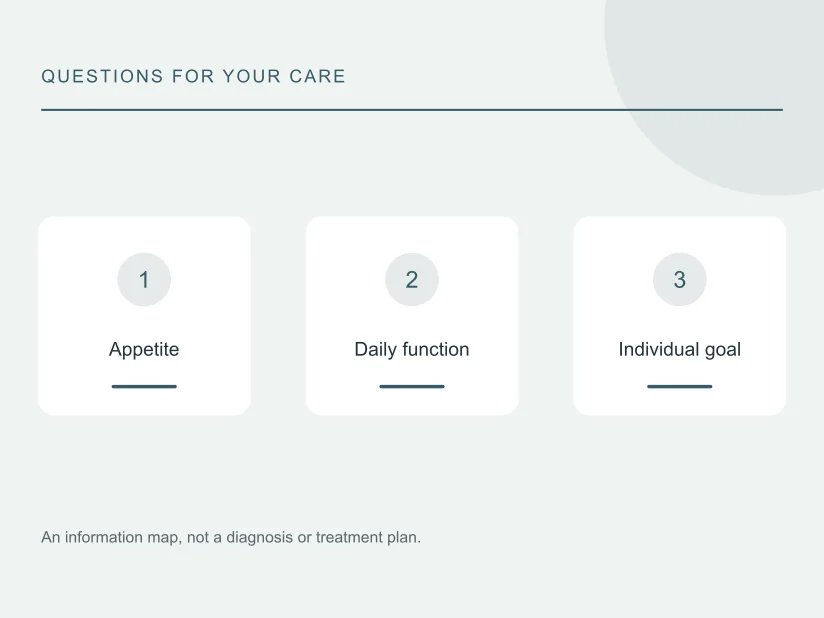
For an older adult, a smaller number on the scale is not automatically an improvement. Appetite, muscle function, illness and the ability to manage daily life may change the priorities. Before following a general weight-loss programme, ask for an individual review that considers nutrition and function as well as weight-related health risks.
General information for adults. Not a substitute for medical assessment.
Do not use body size to rule out nutrition problems
The British Geriatrics Society notes that a raised BMI does not rule out frailty or poor nutritional status. A person can have excess body fat and still have important nutritional or muscle-related concerns. Explain appetite changes, clothing becoming loose, difficulty shopping or cooking, and any recent illness. These details may be more useful than comparing your target with a younger relative’s plan.
Source: British Geriatrics Society: Weight loss and nutrition issues
Treat unintended loss as a separate concern
If weight is falling without trying, tell the clinician rather than celebrating it as a programme result. The NHS advises assessment for unintentional loss or signs of malnutrition. Ask whether swallowing, dental difficulties, medicines, mood, practical support or other health issues need review. This article does not recommend a restrictive diet, a supplement dose or a replacement plan for an older person.
Source: British Geriatrics Society: Weight loss and nutrition issues · NHS: Malnutrition
Choose outcomes that matter in daily life
Discuss what you want to maintain or improve, such as getting out of a chair, preparing meals or keeping independence. The agreed approach may need input from several professionals and support from a carer with your permission. Ask how nutrition and function will be monitored, not just how often you will be weighed. Review the plan if health or living circumstances change.
Source: British Geriatrics Society: Weight loss and nutrition issues · WHO: Patient safety
Common questions
Does a higher BMI exclude malnutrition?
No. Body size alone cannot establish nutritional status or muscle function.
Should unexplained loss be counted as success?
No. Arrange assessment rather than assuming it is a desirable response.
Can a carer help with the review?
Yes, with the person’s agreement. Practical information can support an individual plan without replacing their voice.
Sources and information limits
Sources support general medical principles, not the UAE booking policies or service availability. Confirm instructions and local arrangements with the care provider. The update date does not claim clinician review.
Content policy and review statusQuestions before arranging an appointment?
Enquire about the next steps and availability. An enquiry does not confirm a booking or diagnosis and is not an emergency service.